You ARE Part of Nature
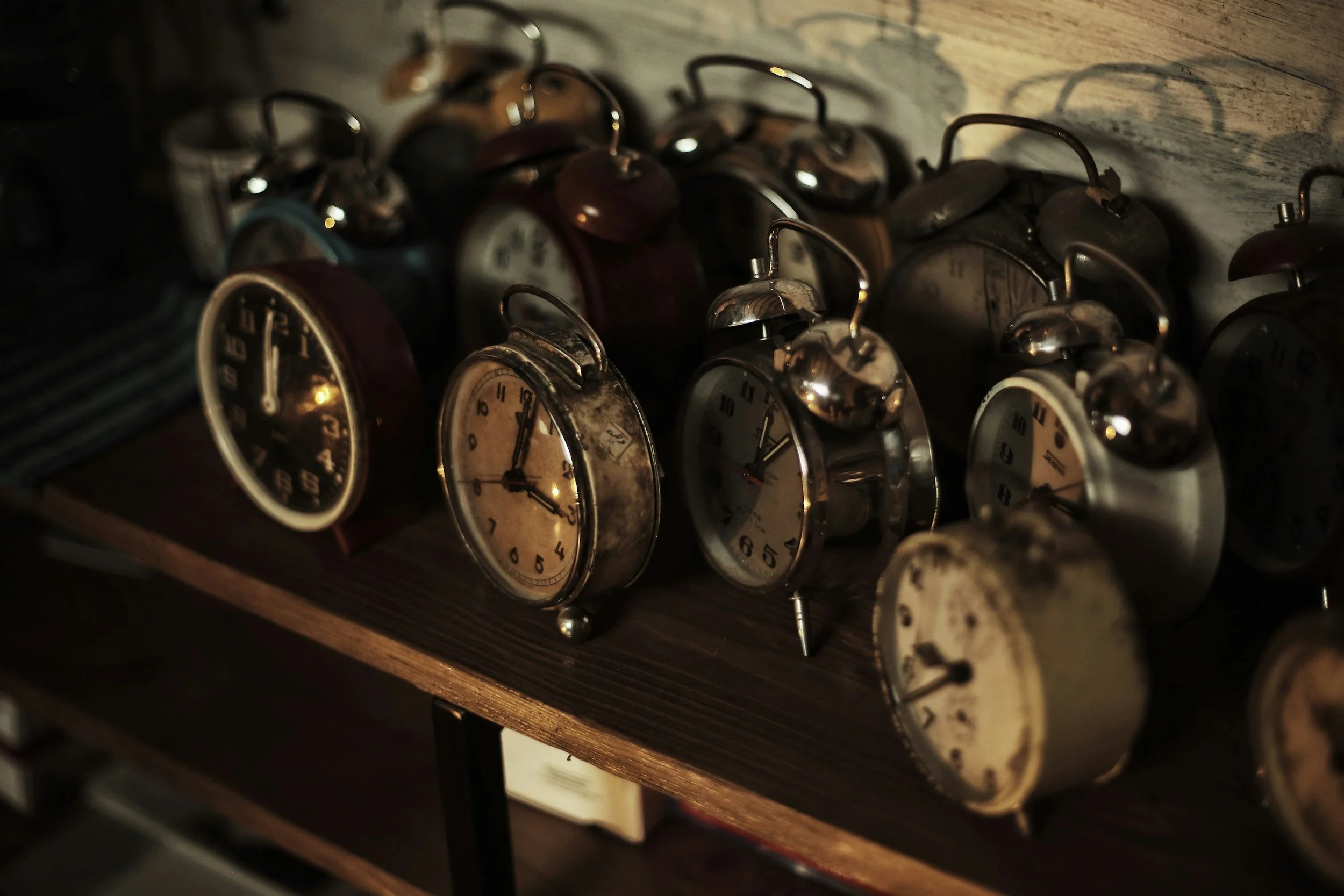
Multiple alarm clocks on a wooden shelf
Ayurveda means “life knowledge.” I believe the reason to practice Ayurvedic principles is to live in harmony with nature. Ayurvedic practices remind us that we are part of nature, and we have a natural rhythm just like the seasons.
Once I started following the natural, cyclical rhythm of my days and seasons, I felt so much more ease. But don’t take my word as anecdotal evidence, there have been scientific studies to prove one of the main components to health is living in sync with the nature. Research on Circadian Science won a Nobel Prize in 2017, and it proved what Ayurvedic practitioners have known for thousands of years: When we live in sync with nature, we are healthier in mind, body, and spirit!
The Ayurvedic Clock is a concept in Ayurveda that helps us with living in sync with the energy shifts throughout a daily cycle. The three doshas (Vata, Pitta, and Kapha) rotate through twice in a 24-hour period, each cycle lasting four hours each.
If you’re interested in exploring this ancient and proven concept, look at the schedule below. Here, I explain the time periods and give you some suggestions on how to make the most out of each one:
6 a.m. – 10 a.m. Kapha Time: Get up as close to 6 as possible if not before to avoid the sluggishness of Kapha. It’s a great time to exercise and to have your caffeine as both will help to balance Kapha.
10 a.m. – 2 p.m. Pitta Time: Have your biggest meal of the day during Pitta time as your digestion is strongest during Pitta. It’s also a good time to organize and plan because of the extreme focus available during Pitta.
2 p.m. – 6 p.m. Vata Time: Because of the mobile and light nature of Vata, this is a great time for creative endeavors. It’s also a good time for communication of all kinds. Try to eat a light dinner before 6 p.m. to maximize digestion before bed.
6 p.m. – 10 p.m. Kapha time: Use the naturally slower energy of Kapha to help you wind down and relax. This is a great time to meditate and practice restorative yoga. Try to be in bed before Kapha ends to help you drift to sleep more easily.
10 p.m. – 2 a.m. Pitta Time: If we are asleep around 10, we are in our deepest sleep during this time of night. This is when the body does its repairs. If we push past 10 p.m., especially when already feeling tired, it’s much more difficult to fall asleep. The heat of pitta rises, and we end up “burning the midnight oil.”
2 a.m. – 6 a.m. Vata Time: We naturally start to have lighter sleep during this time of night. As we get closer to the end of Vata, the body prepares for elimination. Vata time is a great time to meditate because our energy is cleansed overnight and we tend to be more receptive and open.
If you have trouble with digestion, falling asleep, staying asleep, or exhaustion throughout your day, I hope you’ll consider shifting to be more in sync with the natural rhythms of the days. I’ve found it to be extremely helpful. If you’d like more guidance, then let’s chat. I offer a no obligation, 15 minute phone call to help you with your wellness journey.