Are You Really Listening?
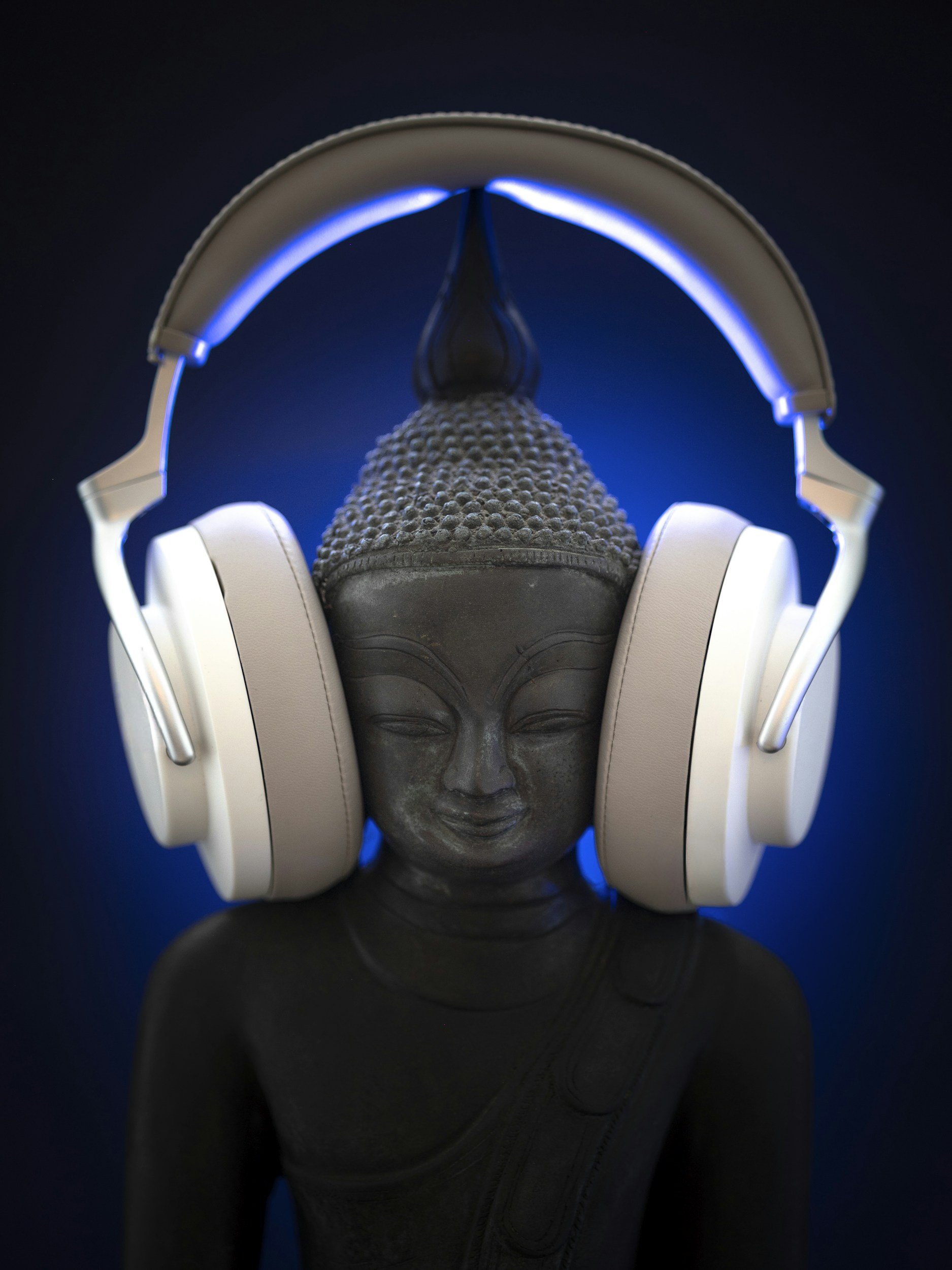
a gray Buddha statue wearing white headphones
One of my favorite activities after a workout is time in the sauna. I don’t tend to sweat much, even during a workout, so the sauna allows me to do so. While there, I like to meditate. Meditation is harder during the discomfort of so much heat, but even if I don’t enter a state of meditation, I am able to stay calm and relaxed.
While I sit with my eyes closed, I enjoy the comings and goings of the sauna community. Often the voices are speaking languages that I don’t recognize. I enjoy hearing the intonations and flow of what is being said. It’s so beautiful to listen to the song of another’s language, and to be free of context, judgment, and the need to respond.
When English-speaking voices come in, my brain immediately goes into listening mode. It’s amazing what conversations that people will have in public with each other; they can be very personal. I find myself really listening, forming questions, and considering potential responses to the conversation, even though I know I won’t say anything at all.
I find it interesting how different the two experiences can be. When I don’t understand what’s being said, my brain is free to simply hear. I don’t have to figure out what I think about it, or how I could contribute to the conversation. But when I do understand the language, my mind has to get involved. I’m gathering an understanding, picking up on the underlying emotions, and anticipating where the conversation is going next.
And as a curious person I researched what may be happening in my mind to create such different experiences.
What I learned is that there is a big difference between hearing and listening. Listening needs genuine interest and presence. It helps you understand the deeper impact and meaning behind what the person is saying.
As an empath, it’s natural for me to fall into active listening when I hear conversations in English. It’s easy for me to understand what the other person is feeling, and the hidden meanings behind the words. While not everyone is empathetic, everyone can build active listening skills. Some of the benefits of being good at active listening are that you tend to build better relationships, enhance your own communication and problem-solving skills, and more easily build trust with those around you.
Here are a few ways you can begin to build your active listening skills:
Be present. Put your cell phone out of sight, turn off your internal dialogue, and focus on what the other person is saying.
Notice your non-verbal cues. Smile, make soft eye contact, lean forward in your seat, and nod.
Show your interest. Ask open-ended questions like, “What was that like for you?” or “How do you want to move forward now?” You can also make genuine “I’m listening” noises, like, “mmmhmm,” “oh, my,” or “wow.”
Reflect what you hear. Paraphrase what’s been said in your own words, or summarize what you heard.
Withhold judgment. Remain neutral and empathetic.
All of these things will help you to become a better listener. You can also keep it simple, and try to listen like you were hearing an unfamiliar language. See if it’s possible to refrain from interpreting, judging, or preparing a response.
In a world full of ways to disconnect, I hope these tips inspire you to work on your connection with others by improving your listening.